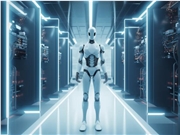
When humanoid robots frequently "go viral" on social media, the public's anticipation for them to enter households has reached its peak. However, the forecasts from industry leaders are more calm and pragmatic.
At the 2026 China Online Media Forum,
What is the "GPT moment" of embodied intelligence?
In his speech, Wang Xingxing set clear quantitative standards for this milestone:
Adaptability in unfamiliar environments: When you bring a robot into a completely unfamiliar environment (such as an office or home you've never been to).
Task completion rate: The robot can autonomously complete 80% to 90% of complex tasks with only simple voice commands.
Natural interaction: The robot is no longer a machine rigidly executing programs but an intelligent entity that can understand ambiguous instructions and possess physical common sense.
Technology roadmap: Major breakthroughs in the next two years
Although reaching the ultimate goal will take time, Wang Xingxing remains extremely optimistic about the recent technological development:
The eve of the breakthrough: He expects that in 2026 or 2027, the field of embodied intelligence will experience a significant technological leap.
Mass production acceleration: In fact,
Extreme cold challenge: Previously, Unitree's humanoid robot successfully completed the world's first autonomous walking challenge in extreme cold weather, walking 130,000 steps at -47.4°C, proving the high reliability of the hardware.
Industry ambition: Building a general-purpose humanoid robot foundation model
As a leading company in the robot industry,
Conclusion: From "going viral" to becoming a "life partner"