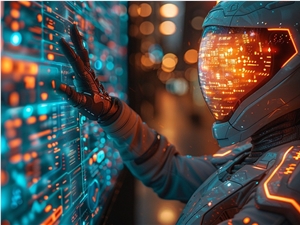
On August 31st, China's first AI long drama to be broadcast on satellite TV, "The Later Journey to the West," entered Hunan Satellite TV's prime time slot and was simultaneously launched on the "Ju Kanzhao" (Great TV Shows) section of Mango TV. This 60-episode series, each about 40 minutes long, was produced by Mango TV and made by Bojing Culture. Throughout the entire production, no cameras were used; all video generation was fully handled by Seedance. Within just one week of its release, the main content on Mango TV had already exceeded 150 million plays.
The people behind this show are two individuals who had been restricted by traditional film logic. The director Li Dongshen has long been filming documentaries, and his work "The Gansu Corridor" received a 9.7 score on Douban, while his "China" series has won numerous national awards. In historical documentaries, many ancient scenes could not be realistically recreated, so he started using AI assistance for production from 2025. When Seedance 2.0 was released in February 2026, the model's breakthrough capabilities made him see the feasibility of AI long dramas. "Seedance 2.0 is much better than previous technologies. I think it's a truly epoch-making and revolutionary product," he said. Once the idea came up, Mango TV didn't hesitate at all—this platform had been building up AI since 2018, with its self-developed AIGC creation platform "Mango Lingchuang" having already completed multiple AI works. The two sides quickly submitted their project for approval within a few days.

From the release of Seedance 2.0 in February of this year, to formal project initiation in May, and then to the debut on Hunan Satellite TV's prime time on August 31st, the first season went through the process of "idea - project initiation - broadcast" in only six months, while the actual production cycle was just three months. It managed to meet Hunan Satellite TV's high standards, which also relied on policy support: "The Later Journey to the West" became the first project to benefit from the "review while broadcasting" mechanism. Lu Haibo, vice president and CTO of Mango TV, believes that this mechanism can continuously absorb audience and regulatory feedback to refine the content. Li Dongshen, on the other hand, pays more attention to its special value for AI production—as models evolve, subsequent content can directly integrate more mature technologies, embedding the model's evolution into the creative process itself.
Over the past century, every link in the film industry revolved around the camera. Li Dongshen says that in the AIGC era, the camera is gone, "the hardest part is how to remove the camera from your mind." He summarizes this shift as moving from "camera logic" to "single-frame logic": creators no longer think about how to shoot, but define what characters and scenes are in each frame, and what changes will occur in the next frame, then let Seedance turn the ideas into dynamic images. A team of about 100 people restructured their roles accordingly—the script and directing group controlled the narrative, the art group was responsible for character and scene design, and the generation team fed prompts, reference materials, and emotions into Seedance for repeated iterations. The traditional film industry's aspects such as costumes, set design, lighting, and cinematography were entirely integrated into the AIGC workflow. The role of the director also changed: "I am more like a project manager, providing the initial spark of imagination and making the final ultimate judgment." Meanwhile, the other 98% of the team members could directly participate in the creation; anyone with an idea could turn it into a visual image immediately.
The change in the cost structure is most obvious. Taking an action scene as an example, a small team working for 10 days costs about tens of thousands of yuan; Li Dongshen estimates that the same scene would have cost between 3 to 4 million yuan if shot with real actors and set design, or between 2 to 3 million yuan if made as a traditional CG animated film. He calls the model a "partner," emphasizing that "AIGC is not a tool; it has independent thinking," so they did not take the mixed approach of "AI + traditional film," but instead reorganized the creative process from the very beginning according to AIGC logic. Lu Haibo sees these changes more significantly: "It has extended from a tool to the entire production relationship of the industry. The core value of AI is to extend human capability, to complete work that once heavily relied on equipment and labor in new ways, gradually building a brand-new film and television industrial system."
"The Later Journey to the West" is just the beginning. Lu Haibo compares this team to a "small vanguard force," aiming to make AIGC content move from being usable to becoming high-quality, and then to scale, ultimately raising the overall level of China's film and television industry. When a long drama without any cameras enters the prime time slot of a satellite TV station, and the cost per episode is reduced to a fraction of the original, the most solid wall of equipment and manpower in film production has already been cracked open by a generation model like Seedance.