On July 9, 2025, the bell at the Hong Kong Stock Exchange rang for a legendary figure in China's manufacturing industry - Zhou Qunfei, the founder of Lens Technology, officially led the company to list on the Hong Kong Stock Exchange, successfully entering the "A+H" dual capital platform. This listing was not only a financing action but also marked that this global leader in precision manufacturing, which started from a small workshop in Hunan, is rapidly transitioning into cutting-edge fields such as smart cars, AI glasses, and humanoid robots.
Market investors have shown their confidence with real money: the public offering of Lens Technology's shares in Hong Kong was oversubscribed by **462.76 times**, and the international placement was also oversubscribed by **16.68 times**, with a net fundraising amount of about HKD 4.7 billion. This enthusiasm reflects investors' strong confidence in its transformation from an "Apple supply chain supplier" to a "core structural components platform for smart hardware."
Looking back over 32 years of development, Lens Technology has grown from a manual glass factory into an industry leader with a 13% market share in the global consumer electronics precision structure components sector. However, the real growth story happened in the past two years - in 2024, the company's revenue reached 69.897 billion yuan, up 28.27% year-on-year; net profit was 3.624 billion yuan, up 19.94%. Entering 2025, the momentum remained strong: revenue in the first three quarters was 53.663 billion yuan, and net profit attributable to shareholders was 2.843 billion yuan, both increasing by nearly 20% year-on-year.
The growth is no longer driven by a single reliance on smartphones. The **smart car business** has become the second engine: revenue in 2024 was 5.935 billion yuan, up 18.73% year-on-year; while the "other smart terminals" segment (including AI glasses, AR/VR devices, etc.) surged by 754.23%, reaching 1.408 billion yuan, highlighting the explosive power of the new business areas.
The technological foundation is also solid. The company has invested over 18 billion yuan in R&D, holds more than 2,200 authorized patents, and was the first to introduce innovative materials such as ultra-thin laminated automotive glass into mass production, becoming a core supplier for leading automakers like Tesla and BYD. In December 2025, Lens Technology further strengthened its position by strategically acquiring Yuan Shi Technology, officially entering the AI computing infrastructure field, aiming to build a dual-wheel drive of "hardware structure + computing power support."
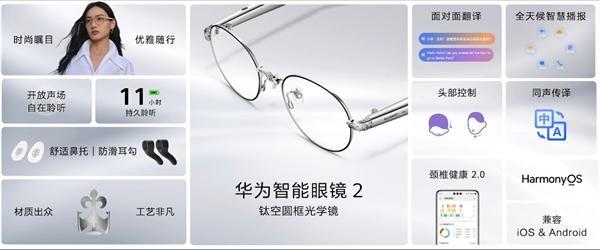
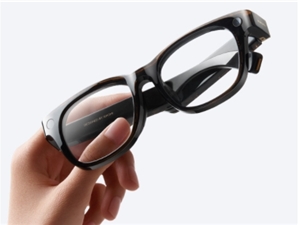
Looking ahead, three directions have been clearly defined: promoting large-scale mass production of smart car lines, accelerating the global sales of AI glasses "Rokid Glasses," and launching R&D on high-precision structural components for humanoid robots. This means that Lens Technology is shifting from "passively adapting to customer designs" to "proactively defining the form of next-generation smart terminals."
When a company that once started with mobile phone glass now provides core components for car windshields, AI glasses frames, and robot joints, its depth of transformation and breadth of layout have far exceeded traditional manufacturing. Lens Technology's story proves that in the era of deep integration between AI and hardware, **precision manufacturing is not a declining industry, but the cornerstone of the intelligent revolution**. And the 462-fold oversubscription is the highest tribute from the capital market to this "Chinese manufacturing" anchor.