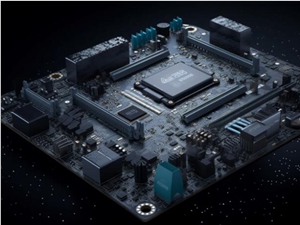
At the NVIDIA GTC conference held on March 16, 2026, CEO Jensen Huang delivered a two-hour keynote speech outlining a grand vision for the future of the AI industry. He predicted that NVIDIA's next-generation Blackwell and Rubin architecture chips would generate at least $1 trillion in revenue by the end of 2027.
Compared to the previous expectation of achieving $50 billion in sales by the end of 2026, this new outlook not only extends the forecast period but also highlights the scale of NVIDIA's business in the context of explosive growth in AI computing power. Huang stated that computing demand has grown by a million times over the past two years, which has left both startups and large enterprises deeply impressed.
The conference featured many highlights, as NVIDIA launched a new LPU (Language Processing Unit) co-processor by integrating technology acquired from the startup Groq. This chip features high-speed memory and is specifically designed to accelerate large language model inference, providing near-instant text generation responses. In addition, NVIDIA also showcased computers using general-purpose CPUs, marking its official entry into the traditional technology sector previously dominated by Intel.
In terms of ecosystem collaboration, NVIDIA announced deep partnerships with Chinese automotive companies such as BYD and Geely, promoting its Drive Hyperion autonomous taxi platform. Meanwhile, to address computing needs in extreme environments, NVIDIA introduced "Space Computing Services," bringing data center-level AI inference capabilities into orbit. Despite competition from rivals like AMD and challenges posed by customers developing their own chips, NVIDIA is trying to build a higher moat in the distributed AI and autonomous systems ecosystem through comprehensive "carpet-bombing" strategies across software and hardware.