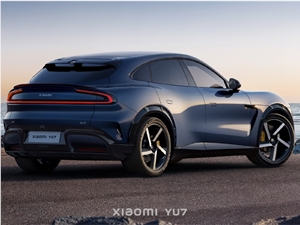
The official Xiaomi Automobile disclosed details about the intelligent driving and OTA upgrade of its new YU7 series in the latest "Answering Netizens' Questions" session. The highly anticipated smart base has undergone a key adjustment, and after fully upgrading to the Xiaomi HyperOS 1.16 version, the long-range, Pro, and Max versions of the YU7 have confirmed that they will officially be equipped with the "Xiaomi XLA Cognitive Large Model."
As a core attempt under Xiaomi's new vehicle architecture, the full release of the HyperOS 1.16 version marks that large model technology is rapidly moving toward the car's underlying control and intelligent driving. According to official information, in addition to restructuring the architectural base, the new version also adds several practical functions to address daily pain points for owners, including a Beta version of voice-controlled driving and a challenging parking lot basement-level navigation feature. In the future, as algorithms and large models continue to evolve, this series of vehicles will unlock more rich intelligent experiences.
In addition to the full coverage of the intelligent driving large model, the official also provided clear driving recommendations regarding the balance between performance and range. For example, for the YU7 GT model, drivers can freely switch between "Comfort Mode" and "Economy Mode" during daily commutes. In Comfort Mode, the overall power output is smoother and more linear, and the suspension efficiently absorbs most road vibrations; while switching to Economy Mode, the front motor will default to disengaging, and the system will drive through the rear wheels to significantly reduce energy consumption. This is combined with the standard energy recovery mode and the air conditioning ECO mode to maximize the vehicle's range.
Notably, in order to accommodate passengers who are prone to motion sickness, the new system has specifically optimized the "Motion Sickness Relief Mode." This mode reduces the occurrence of motion sickness by finely adjusting power response, brake feel, and the timing of energy recovery, while also coordinating the suspension vibration filtering and stability of the vehicle body posture, making it easier for users accustomed to traditional internal combustion engine vehicles to adapt seamlessly.