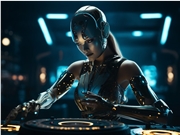
Recently, a man from Hangzhou, Zhejiang Province, who has no professional music background or knowledge of music theory, has achieved a monthly income of tens of thousands of yuan by using AI tools, which has drawn widespread attention in the industry. This incident directly demonstrates the disruptive changes brought by generative AI in the field of music creation, lowering the threshold for music production to an all-time low.
In the creative process, the man mainly provides creative inspiration or sings simple tunes, while the entire process of lyric writing, composing, arranging, and even singing is fully automated by AI. Thanks to the high efficiency of AI in creation, users only need to input an image or a short instruction, and the system can quickly generate a highly complete song within 40 seconds.

Currently, the music generated by this technology has shown a very high level of professionalism, capable of easily covering various mainstream music styles such as pop, rock, classical, and electronic. The final vocal performance and overall quality have already reached the level of real human singers, making it impossible for ordinary listeners to distinguish whether the singer is AI or a real person.
This phenomenon not only confirms that AI music has mature commercial monetization capabilities, but also indicates that AI is reshaping the production model of digital entertainment content.