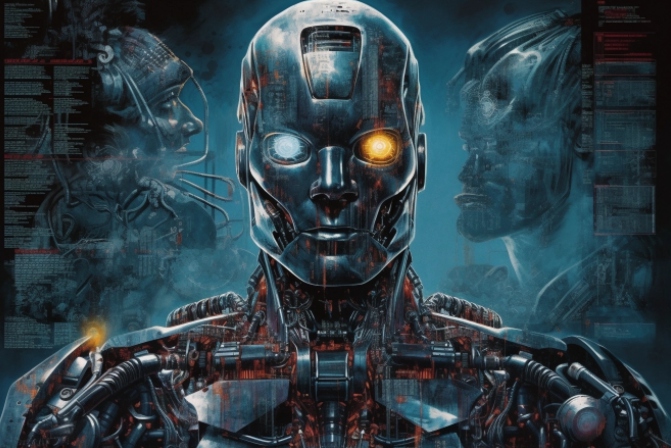
At today's grand opening of CES2026, the leader in the robotics industry, Boston Dynamics, announced a milestone development: After years of technological iteration and rigorous testing, the Atlas humanoid robot has officially entered mass production. This not only marks the end of experimental technology but also signals the official start of large-scale commercial applications of humanoid robots.

According to information released on site, Boston Dynamics' headquarters in the United States has immediately started its production line. Although production is proceeding non-stop, orders for 2026 have already been sold out. The first lucky "employers" include Boston Dynamics' major shareholder Hyundai Motor and its latest AI strategic partner Google DeepMind. These robots will be deployed at Hyundai Motor's robotic Metaplant application center to perform industrial tasks such as material handling and order fulfillment.
As an enterprise-level humanoid robot, the mass-produced Atlas demonstrates remarkable autonomy. It can quickly learn new tasks and adapt to dynamic environments, and it also has strong energy management capabilities — when the battery runs out, it can autonomously navigate to a charging station to replace the battery and immediately resume work, achieving true seamless operation. In addition, through collaboration with Google DeepMind, Atlas has been given deeper cognitive abilities, allowing it to handle more complex logical reasoning and decision-making.
Hyundai Motor Group has high hopes for Atlas and plans to deploy tens of thousands of robots in its manufacturing facilities. To this end, Hyundai Motor has announced an investment of $26 billion to build a new robotic factory, with an annual production capacity expected to reach 30,000 units. These series of actions clearly indicate that starting from 2026, humanoid robots will no longer be just stars in laboratories, but will truly enter the core of real productivity.