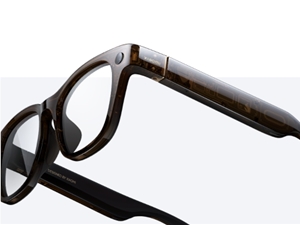
At the recently concluded 2026 Google I/O Developer Conference, AR pioneer XREAL officially unveiled its Project Aura smart glasses and announced that the product will be fully shipped by the end of 2026. This device, built on the Android XR architecture, not only achieved breakthroughs in lightweight design but also provided a new paradigm for the mass production of AR glasses through its unique "separated computing" solution.

The Ultimate Balance of Lightweight: "Pocket Computing" Under 90 Grams
Under current hardware conditions, how to balance lightweight wearability, high-performance computing power, and long battery life has always been an industry challenge. XREAL's answer is the "separated design": moving the heavy processor, battery, and touch module out of the frame and integrating them into an external box that can easily fit in your pocket.
This design successfully kept the weight of the Project Aura glasses under 90 grams, offering an excellent wearing experience. This external module is not only a power source but also integrates a physical touchpad, serving as a powerful complement to native gesture operations. To achieve precise interaction, the glasses frame is equipped with three wide-angle cameras. According to on-site testing, their gesture recognition range and sensitivity are impressive, allowing easy movement and pinch operations even during motion.
Native Android XR Ecosystem: Deep Empowerment from Google AI
As a pioneering product of the Google Android XR platform, Project Aura can access the full suite of spatial applications natively. At the developer conference, it demonstrated immersive 3D navigation in Google Maps and the ability to play full-screen 180-degree/360-degree VR videos on YouTube.
The biggest technological highlight of this product is the deep integration of multi-modal Gemini AI. When you connect the glasses to a laptop via DisplayPort, the system automatically triggers the "auto spatialization" process, converting flat documents, web pages, and mobile apps into 3D environments that appear "suspended" in your visual space, creating an accessible 3D workspace and entertainment environment.
Powerful Specifications and Future Outlook
Project Aura is equipped with XREAL's self-developed X1S spatial computing chip and deeply collaborates with the Qualcomm Snapdragon XR platform, ensuring sufficient computing power. In terms of battery life, although software optimization is still ongoing, the current version can support approximately 4 hours of continuous use.